No ads. No paywall. All articles are free to read and share. If you enjoy Unprecedented, consider becoming a paid subscriber at a special rate:
At an age when most soccer players have long-since hung up their boots, Cristiano Ronaldo did something very different.
The date was November 2022. Ronaldo’s 38th birthday was fast approaching. The Portuguese soccer legend known as "CR7" (his initials, plus the jersey number he first wore at Manchester United) was in the midst of a frustrating season.
Ronaldo had returned to the Manchester club where he first became a global superstar on a two-year deal in 2021. But in his second season back, United were competing not in the European Champions League, but in the second-tier Europa League.
Making things worse, Ronaldo was playing badly. He had scored just 3 goals in 16 games. He was being given less game time. The friction between him and team manager Erik ten Hag was growing.
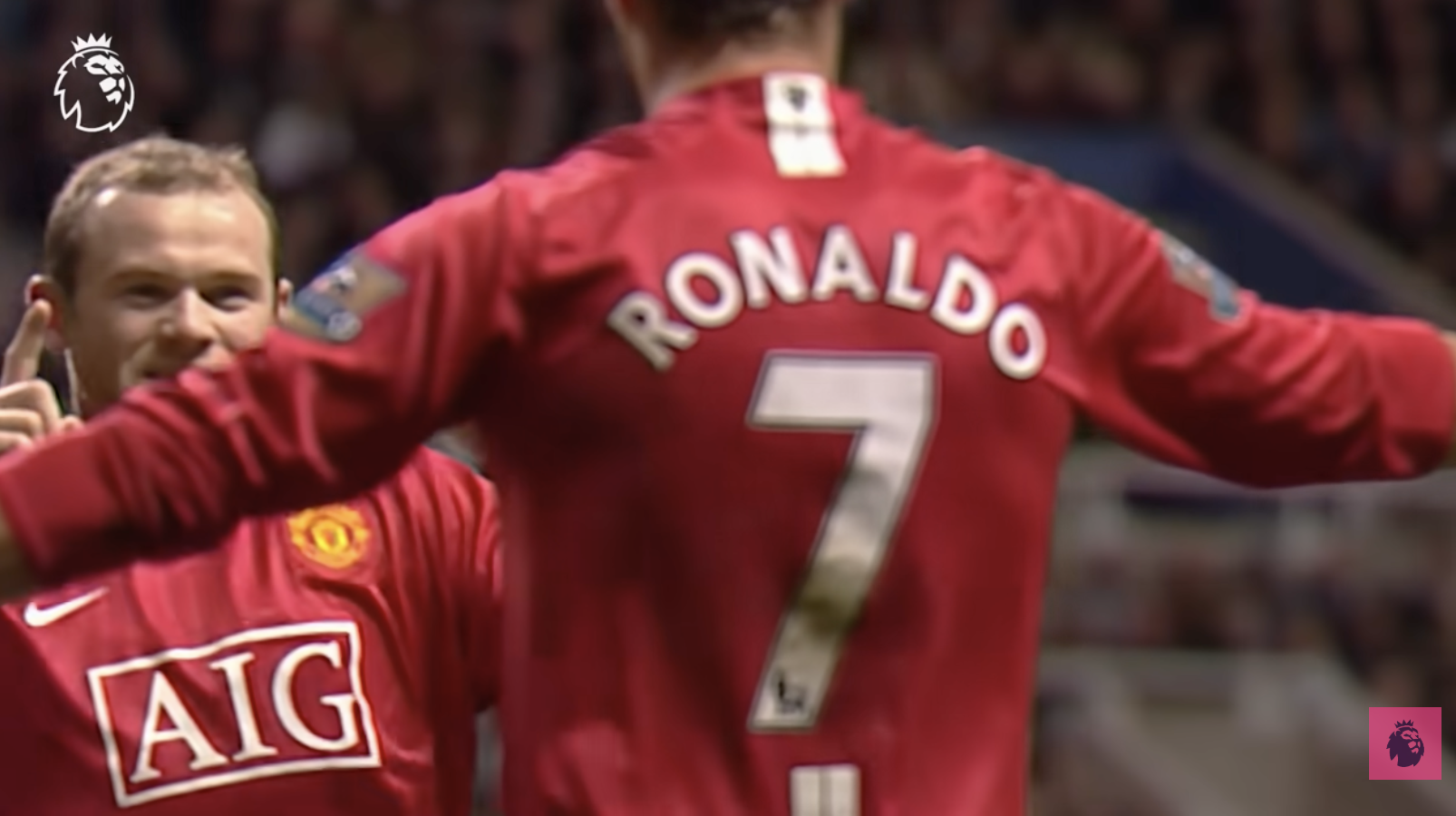
It was quickly becoming clear that neither Ronaldo nor his team were on a track to recapturing their previous glory days.
Then, suddenly, following a controversial interview with Piers Morgan, Ronaldo was gone.
In the briefest of announcements, Manchester United said their aging star was leaving “by mutual agreement, with immediate effect.”
There would no farewell match.
No tributes from the club.
Ronaldo’s Premier League career was over.
But the story didn’t end there
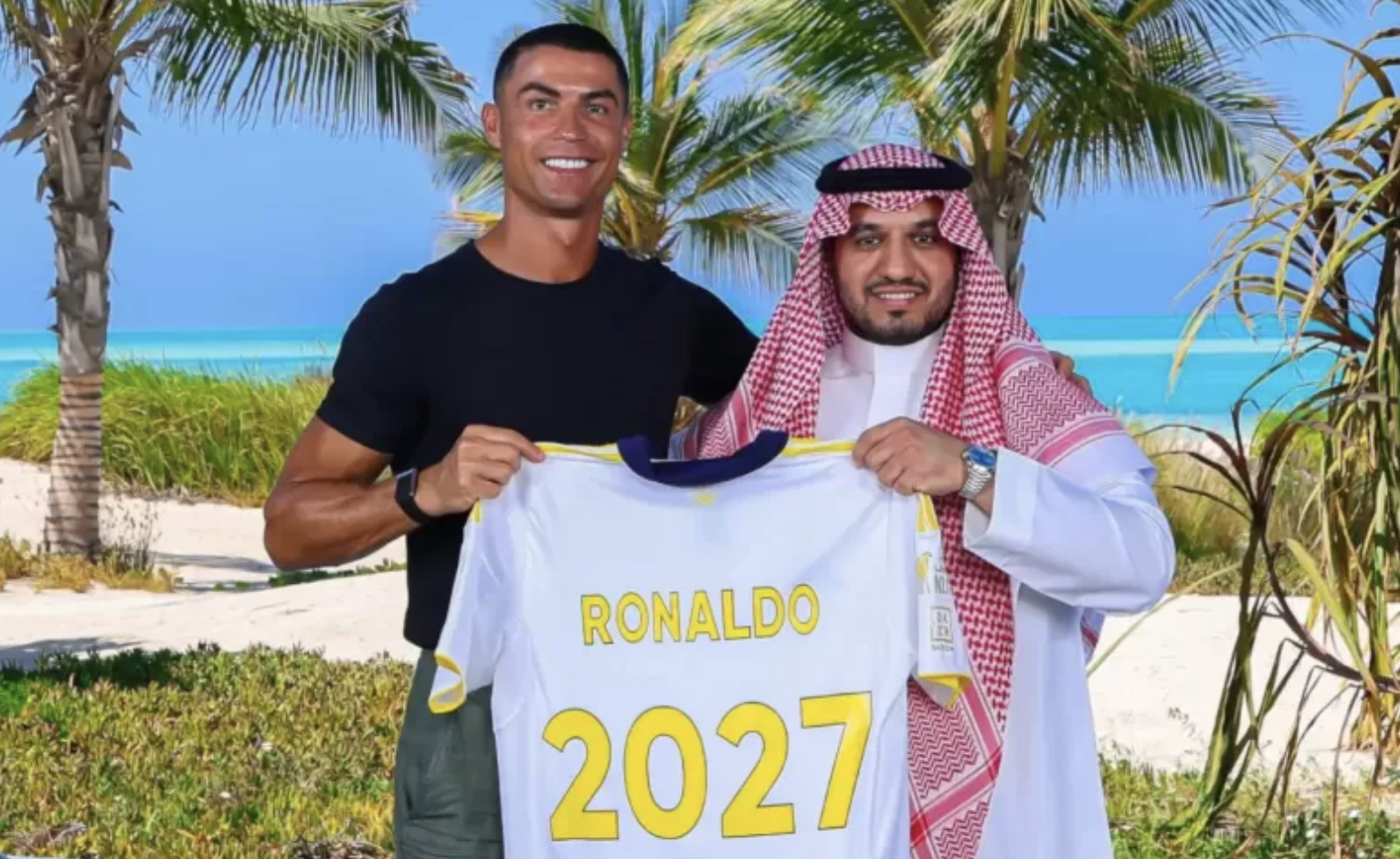
In January 2023, one month before his 38th birthday, as fireworks exploded to welcome him, Ronaldo trotted onto the field of a stadium in Riyadh, Saudi Arabia in the yellow-and-blue strip of the Al-Nassr soccer club.
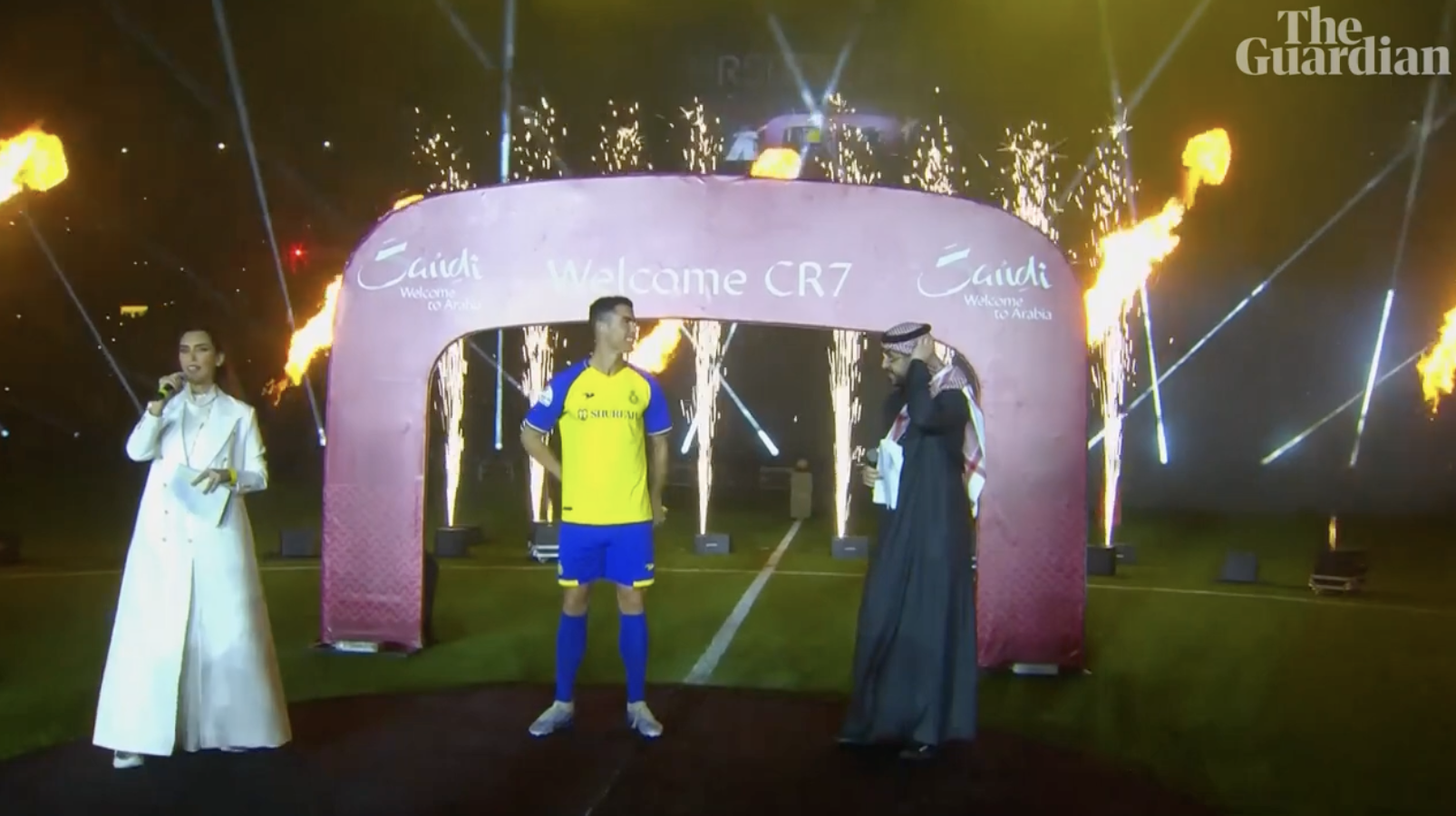
Ronaldo’s decision to join the Saudi Pro League was not motivated by a desire to climb new mountains.
But it did deliver him a mountain of cash.
His initial contract was reported to be worth $207 million per year, with $75 million for his soccer skills and the remainder through advertising and marketing commitments designed to help elevate Saudi Arabian soccer on a global scale.
The unprecedented deal was backed by the Saudi Public Investment Fund (PIF) and put Ronaldo on track to become the world's first billionaire soccer player.
Less than three years later, according to Bloomberg, he’s achieved that goal.
In June 2025, at age 40, Ronaldo inked an even more lucrative contract—worth up to $700 million over the next two years.
It's a deal which, as SI.com reported, comes with a host of other perks:
Apart from paying Cristiano Ronaldo a king's ransom, Al-Nassr are also taking royal care of the Portuguese forward off the pitch. He and his family are given the service of 16 people, including three drivers, four housekeepers, two chefs, three gardeners, and four security personnel. All that costs $1.93 million per year.
A further $5.5 million has also been allocated to take care of Ronaldo's private jet transportation. Apart from that, he has also been given 15% ownership of the club, which is worth around $45.4 million. There's a $110,000 bonus per goal and a $55,000 bonus per assist, both of which will have a 20% increment in the second year of the contract.
Interviewed at the time of his contract renewal, Ronaldo went out of his way to praise the Crown Prince of Saudi Arabia, Mohammed bin Salman (MBS):
"We have to mention the Highness, our Crown Prince… he do an amazing job… he’s the most important person in the changes of the country… we have to appreciate him."
Soccer's first billionaire then added: "I’m Portuguese, but I belong to Saudi Arabia."
Saudi Arabia has invested massive sums to “own” Cristiano Ronaldo. What, exactly, does the Kingdom get in return?
Today, sports fans around the world are aware that Cristiano Ronaldo is playing in the Saudi Pro League.
In November 2025, CNN devoted an entire article to the "outrageous bicycle kick" goal the 40-year-old scored in the final minute of stoppage time during Al Nassr’s 4-1 win over Al Khaleej.
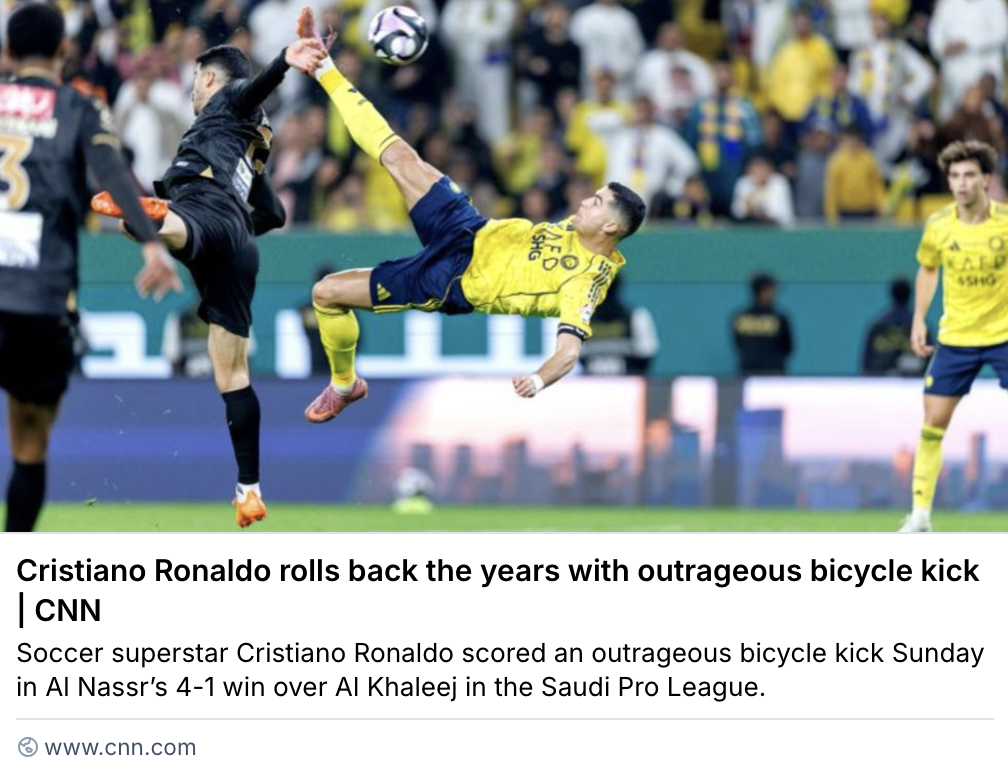
Video clips of that goal generated billions of impressions around the world.
But what Ronaldo offers Saudi Arabia goes way beyond his performances for a team that plays in a stadium which, even with Ronaldo on the pitch, has never filled all of its 25,000 seats.
Since arriving with great fanfare in Saudi Arabia, Ronaldo has helped MBS achieve two key goals of his broader Vision 2030 strategy:
- Accelerate Saudi Arabia's transformation as a global sporting destination — by normalizing the Kingdom as a place where elite athletes live and work, with the capacity to host the world's biggest, most important sporting events
- "Sportswash" the brutal reality of the regime's ongoing human rights abuses — by showcasing his luxurious lifestyle on social media and promoting Saudi Arabia as a tourist destination, even as the Kingdom executed a record 345 people in 2024 and is on pace to surpass that total in 2025
Ronaldo's presence on the Al-Nassr team has transformed the Saudi Pro League from a regional league to a globally relevant one.
He has paved the way for a growing roster of major international stars to strike their own lucrative deals with Saudi soccer clubs.
He created a sheen of legitimacy for soccer's highly corrupt governing body FIFA to award the 2034 World Cup to Saudi Arabia.
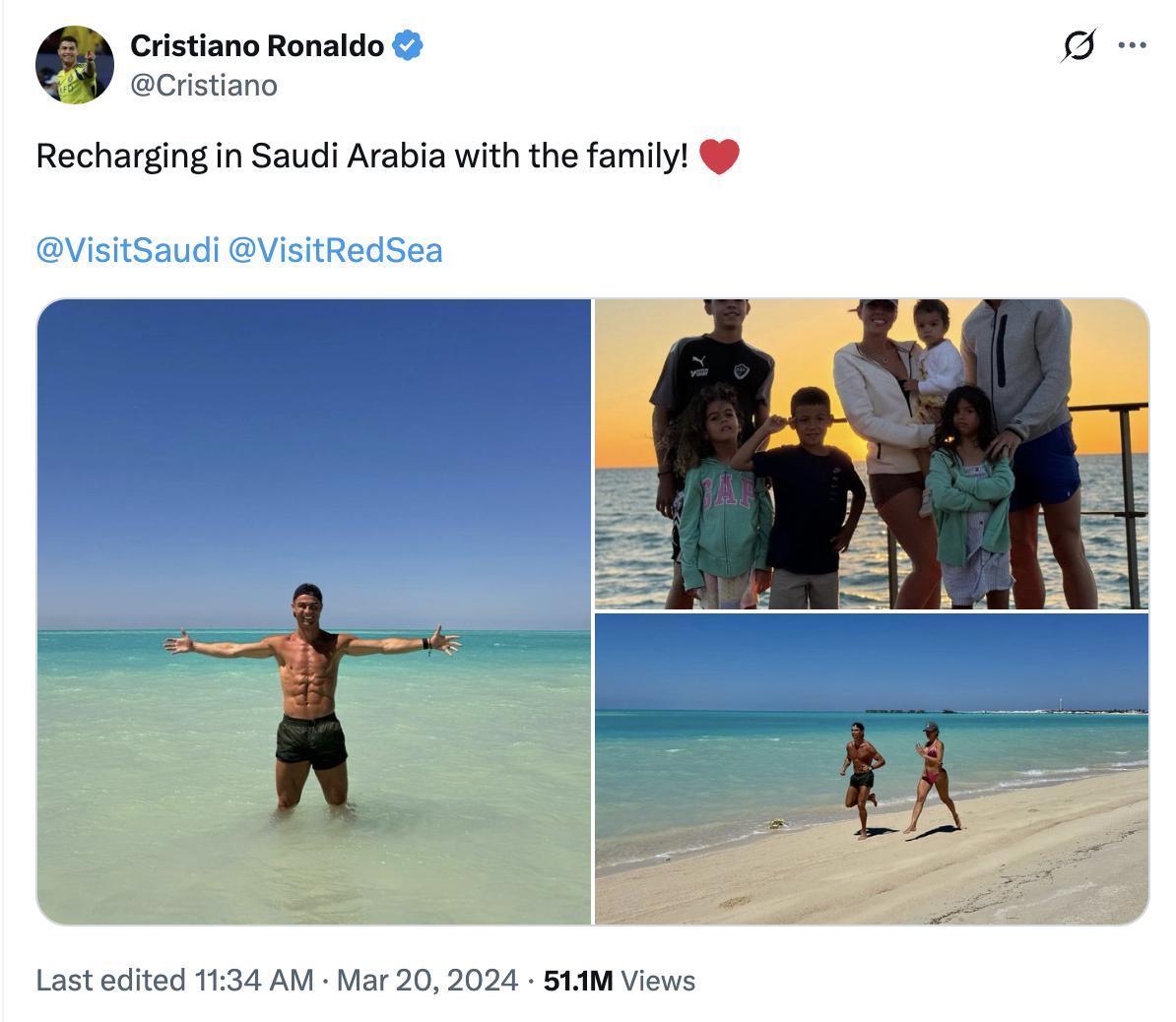
And he routinely presents his one billion-plus social media followers—including 669 million on Instagram alone—with a picture of Saudi Arabia as a paradise offering beaches, family fun, luxury living, and long-term opportunity.
Not all foreign workers get the perks that CR7 and his family enjoy
As Amnesty International documented in May 2025:
Migrant domestic workers in Saudi Arabia endure gruelling, abusive and discriminatory working conditions, which often amount to forced labour and human trafficking
Human Rights Watch reported in September 2025 that migrant workers drawn to the Kingdom by the Vision 2030 construction boom are:
Often stranded without pay for months, forced into undocumented status, or left with no choice but to return home at their own expense, abandoning outstanding wages and benefits
In many cases, the "die first, I'll pay you later" attitude of Saudi employers leaves the families that workers have left behind struggling to make ends meet, often with debts owed to recruiters who charge fees that are illegal under Saudi laws.
With Ronaldo, Saudi Arabia is getting what they pay for—and more
With his one billion-plus social media followers, Ronaldo has the power to connect with a global audience that's bigger than the population of the United States and Europe combined.
He's six times bigger than FIFA on social media.
He's three times bigger than Nike.
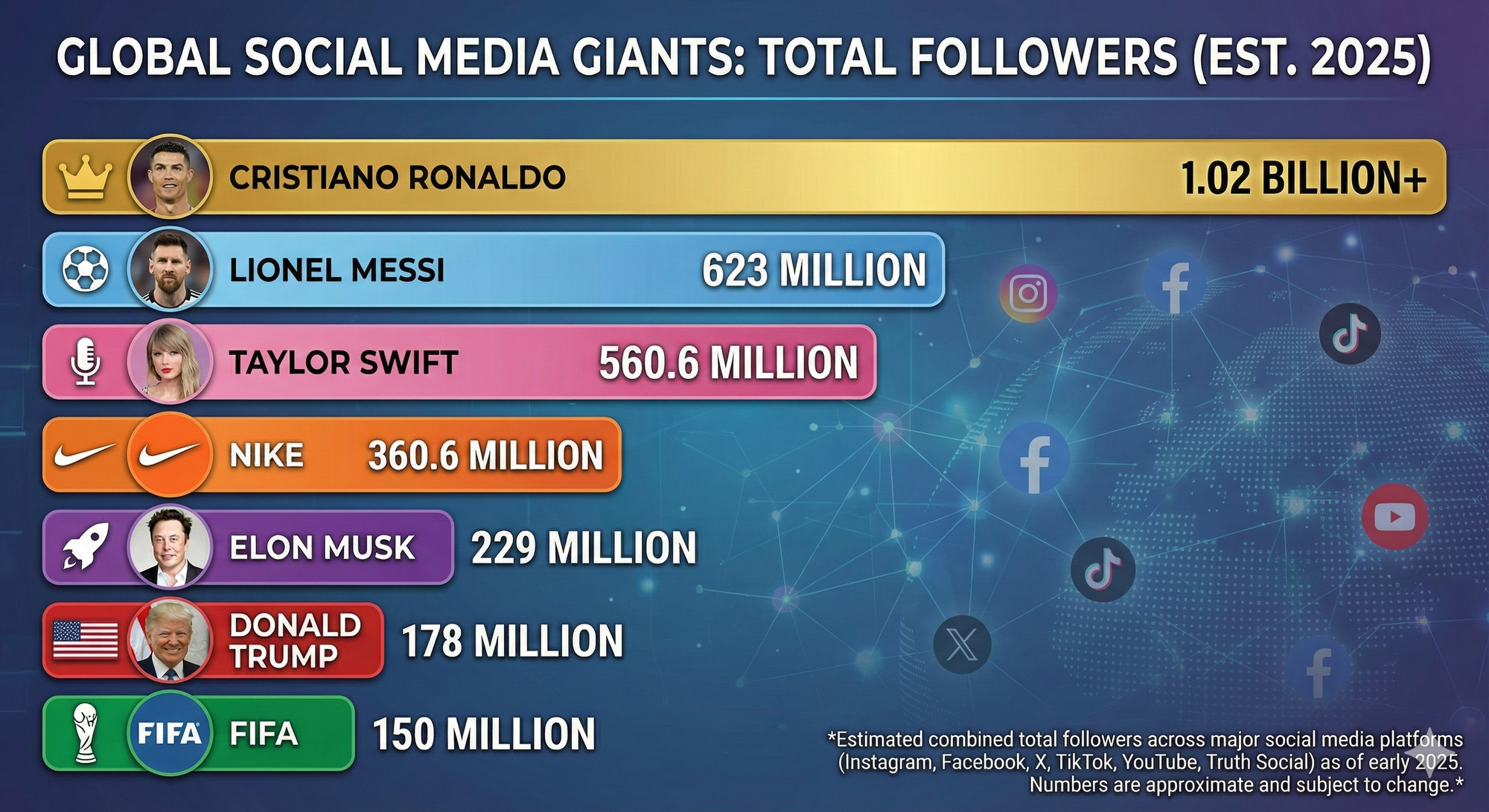
Even Lionel Messi, the second-most followed soccer player on social media, is so far behind Ronaldo that he would need to steal most of Taylor Swift's followers to catch him.
In today's attention economy, Ronaldo has a unique ability to generate engagement, drive conversations, and make millions look in his direction anytime he wants.
As the Football Benchmark Group noted in April 2025:
When, in July 2024, Cristiano Ronaldo shared a post about his family trip to the Red Sea, it garnered over 16 million likes on Instagram. Based on its 2024 level of engagement, the official VisitRedSea account, which promotes one of Saudi Arabia’s flagship tourism developments and a key component of the country’s broader tourism strategy, would need 80 years to achieve the same level of exposure that Ronaldo generated in a single promotion of the tourism destination.
But Ronaldo isn't an entirely free man.
As he happily admits, he "belongs" to Saudi Arabia.
And that means the Saudis can now direct the world's attention toward Ronaldo any time they don't want us looking at something else.
Which brings us to June 2025
On 13 June 2025, it was announced that Cristiano Ronaldo, "one of the most celebrated athletes of all time," had been appointed as the Global Ambassador of the Esports World Cup 2025, an annual esports tournament series that takes place in the Saudi capital Riyadh.
As PR stunts go, this was a big one.
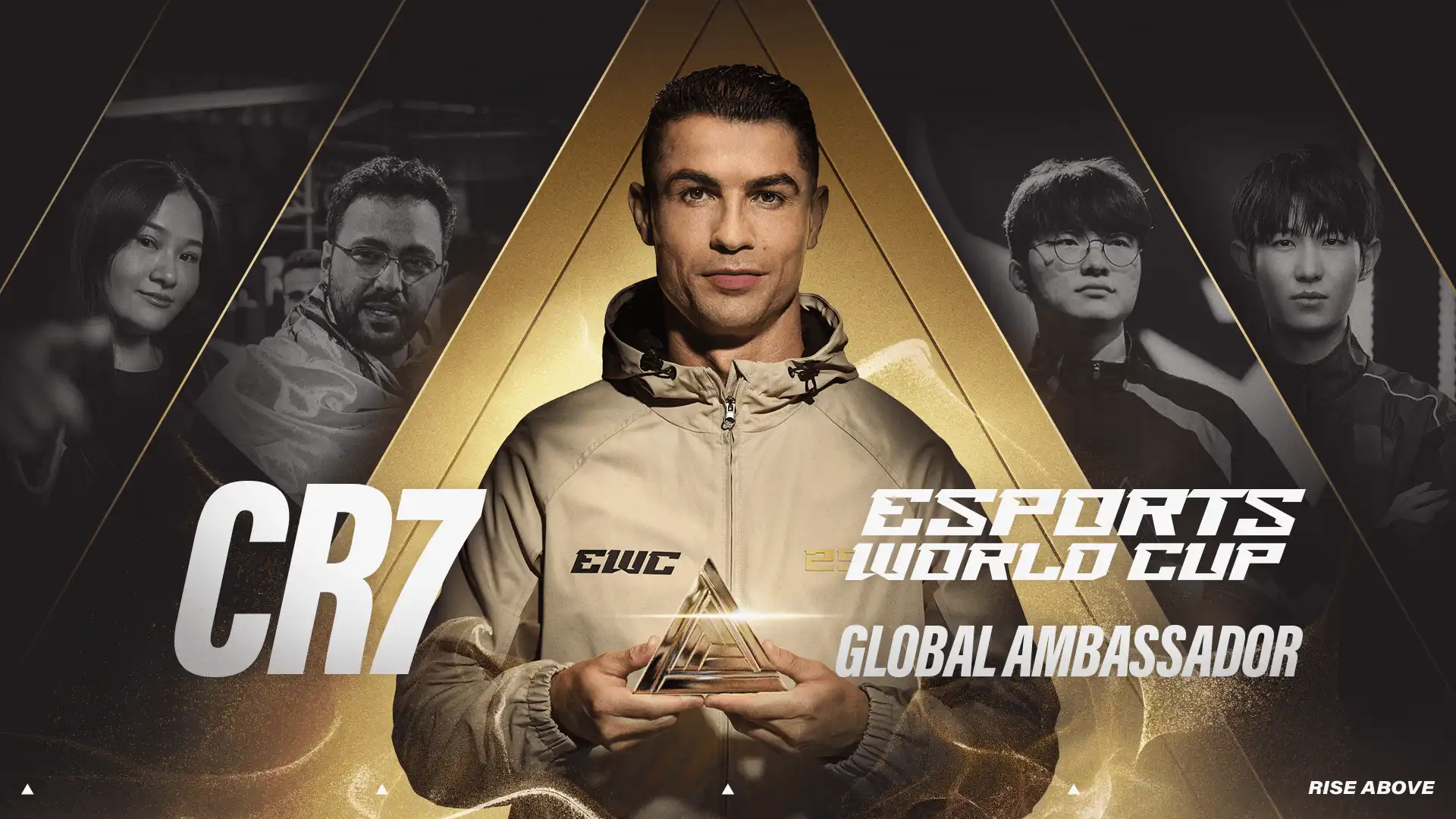
Ronaldo simply had to announce his paid, ceremonial role at the tournament to his billion online followers to generate immediate—and global—buzz for the event.
A buzz loud enough to drown out a historic execution
Ronaldo’s "Ambassador" role at the Esports World Cup included participating in the tournament's "Rise Above" marketing campaign.
According to the organizers, the campaign sought to celebrate "unlocking human potential, pushing the boundaries and going beyond the norms in the pursuit of greatness," values that were "exemplified by Ronaldo" and mirrored by the "athletes" who would compete in the event while sitting in chairs.
On 14 June 2025, one day after the Ronaldo announcement, Saudi Arabia executed the prominent Saudi journalist Turki al-Jasser for the crime of "high treason."
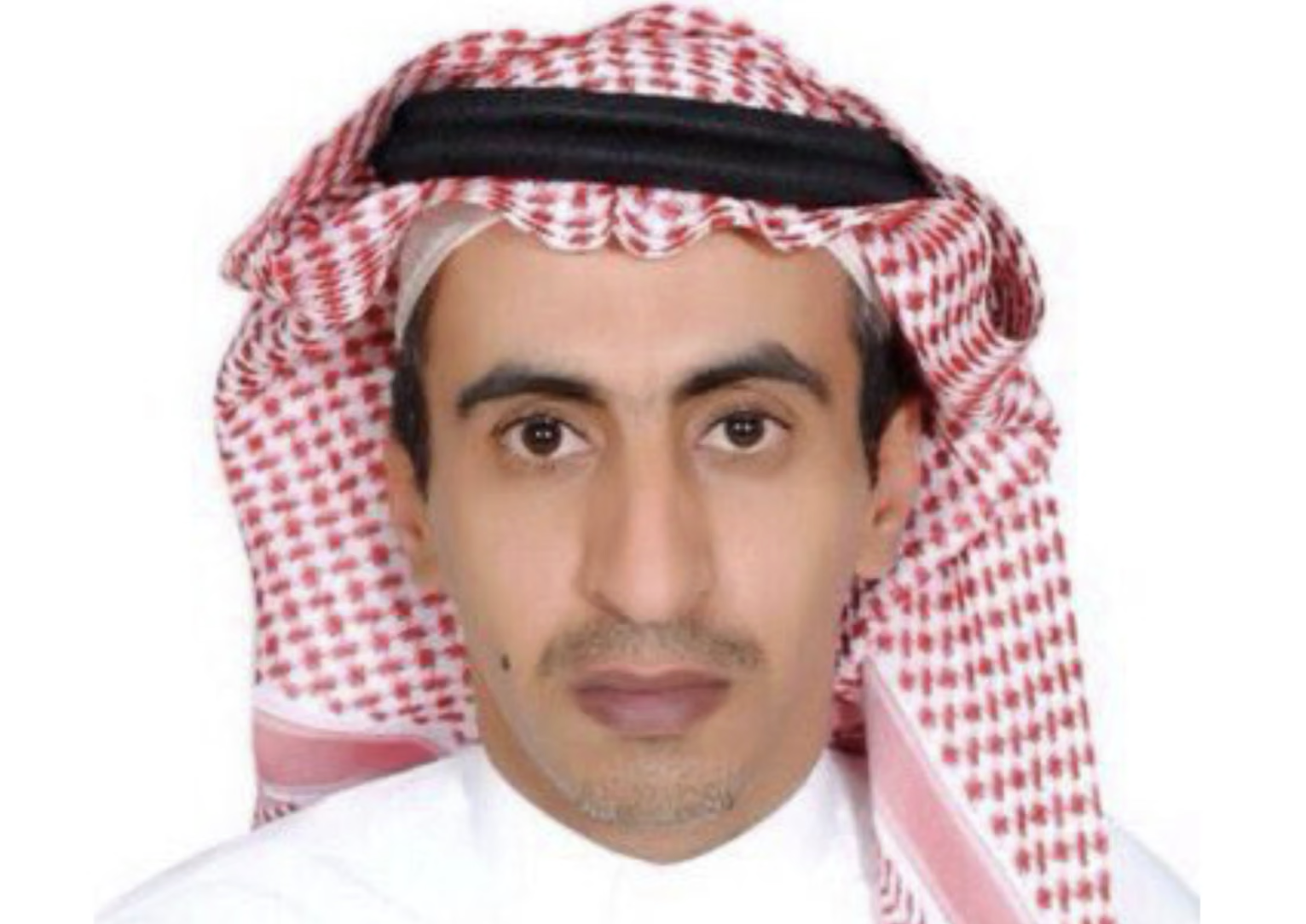
According to The Guardian, al-Jasser's "high treason" was apparently the crime of pushing the boundaries and going beyond the norms via an "anonymous Twitter account that accused the Saudi royal family of corruption and human rights abuses."
The execution, in which al-Jasser was likely beheaded with a sword, was:
The first high-profile killing of a journalist by the Saudi state since the 2018 murder of Jamal Khashoggi... Reporters Without Borders said al-Jasser was the first journalist to be sentenced to death and executed in Saudi under the rule of Mohammed bin Salman.
Despite the historic nature of this execution, it drew far less attention online than the previous day's news that Cristiano Ronaldo was adding his "powerful presence" to the marketing of an esports competition.
Unlike the MBS-sanctioned murder of Jamal Khashoggi in 2018, the execution of al-Jasser—for years-old tweets—was ignored by the likes of The New York Times and the BBC. It got less attention on Ronaldo-loving CNN than the network later gave to the soccer star's overhead bicycle kick.
The most notable English-language media coverage of al-Jasser's execution came via the AP and Stephanie Kirchgaessner's article for The Guardian, which appeared four days after the bloody execution.
Human rights organizations spoke out as quickly and as forcefully as they could, with Carlos Martínez de la Serna of the Committee to Protect Journalists saying on June 14:
The international community’s failure to deliver justice for Jamal Khashoggi did not just betray one journalist; it emboldened de facto ruler Crown Prince Mohammed bin Salman to continue his persecution of the press, and today, another Saudi journalist has paid the price.
CPB's social media reach (less than one million followers across all platforms) cannot compete with that of Cristiano Ronaldo.
Without significant media coverage to amplify their comments—coverage that did not materialize—the statements by those condemning Saudi Arabia's latest execution made scarcely a ripple in the digital world.
Meanwhile, the silence from self-proclaimed "free speech absolutist" Elon Musk (230 million X/Twitter followers)—who bought Twitter, the platform where al-Jasser's alleged "high treason" occurred—was, as usual, deafening.
The Saudis, of course, already own a large chunk of Musk's xAI company, which owns both X and the Grok chatbot.
Saudi money buys silence as human rights abuses persist
Sports stars aren't the only ones pocketing cash from the Saudis.
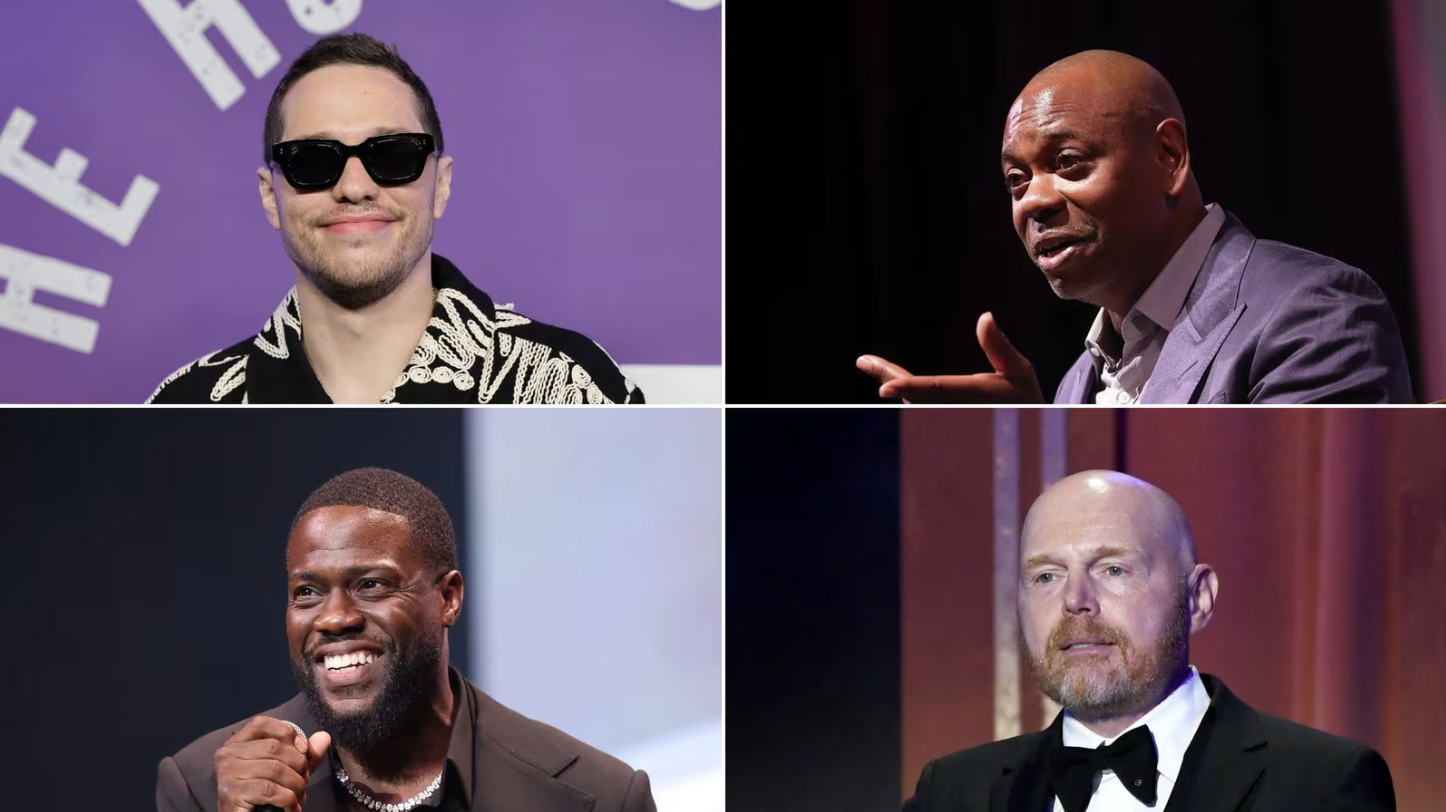
From 26 September to 9 October 2025, more than 50 comedians—including Kevin Hart, Dave Chappelle, Chris Tucker, Bill Burr, Pete Davidson, Aziz Ansari, Whitney Cummings, and Louis C.K.—took part in the Riyadh Comedy Festival, an event that coincided with the 7th anniversary of the brutal murder and dismemberment of Washington Post columnist Jamal Khashoggi.
One comedian who didn't make it to Riyadh was Tim Dillon, who, after first joking that "they’re paying me enough to look the other way," was then fired from the festival lineup over jokes he had made about slavery in the Kingdom.
One prominent voice against the festival was comedian and actor David Cross, who wrote on his blog:
I am disgusted, and deeply disappointed in this whole gross thing. That people I admire, with unarguable talent, would condone this totalitarian fiefdom for…what, a fourth house? A boat? More sneakers?
Ronaldo, who earned more than half a billion dollars in his soccer career before moving to Saudi Arabia, was criticized for selling out in much the same way when he made his move to Saudi Arabia.
Ronaldo didn't just "look the other way," he embraced the "totalitarian fiefdom"
In the trophy-winning days of his European career, Ronaldo cultivated a personal brand that was conspicuously apolitical.
To his fans and his sponsors, "CR7" was the embodiment of excellence, discipline, and the relentless pursuit of perfection.
By choosing to end his career in Saudi Arabia—and to accept hundreds of millions of dollars specifically to help launder the reputation of a regime with a documented history of torture, mass executions, and the suppression of women's rights—Ronaldo crossed a line.
He's no longer a global athlete above the political fray. He's a state asset deployed to spread authoritarian propaganda—a shiny object used to distract the world from the screams in the torture dungeons.
All of my content is available free of charge, but if you enjoy Unprecedented, please consider becoming a paid subscriber.
Subscribe to Unprecedented
Subscribe to the newsletter and unlock access to member-only content.